In 2014, a new work of mine was being premiered in New York and I thought of inviting Kaija on a whim. I didn't know her at that time, but I knew she was in residence at Columbia. I was so happily surprised to receive such a warm response to the invitation, but alas, Kaija said she was too busy to attend. To my surprise, as the concert was starting, I turned to the doors so see Kaija standing in the back with a smile. I was thrilled. I thought of the things I might ask her about at intermission, but when I got up to take a bow after my work was performed, I saw her slipping out the back of the hall. Though I didn’t speak to her that evening, our correspondence had begun. I wrote to her the next day and we began exchanging thoughts on a wide variety of topics (and I was thrilled and relieve to know she enjoyed my premiere!).
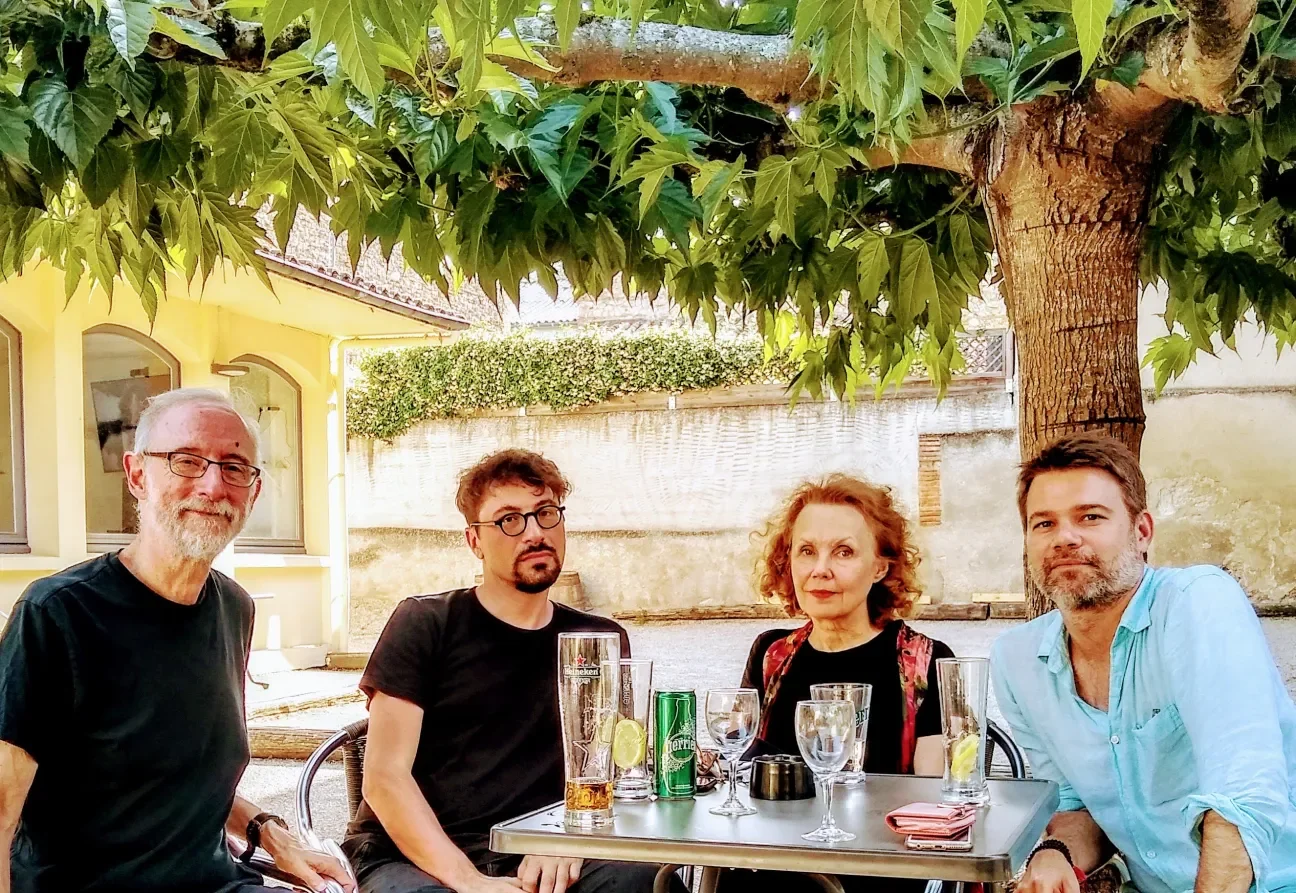
Kaija and I exchanged a great deal of correspondence over the course of the next few years and I was encouraged by her words about, and belief in, my music. We kept up over the years, meeting in New York when she was there, which was often. In 2019, Kaija and I worked together at the Etchings Festival in France, along with composers Martin Brody and Francesco Filidei. It was a memorable week, and Kaija became great friends with my mother who I brought along that summer. My mother and Kaija connected over their shared stories of life in post-war Europe. My mother was a refugee in Germany from '45 to '53, the year just after Kaija was born.
From left: Martin Brody, Francesco Filidei, Kaija Saariaho, John Aylward
There are few composers that have impacted my life as deeply and as spiritually as Kaija has. Partly through our own correspondence and partly because of the bond she had with my mother over life in post-war Europe. Kaija’s music speaks to that time of reconstruction, fraught with the echoes of a war just past and of the hope so many had of rebuilding. Her sensitivity to sonic textures perhaps defined the ways in which acoustic music can resonate with the technological underpinnings of the decades through which she lived and that permeated so much of our understanding of modernity.