MacDowell Dispatch #2: Contemplating Time
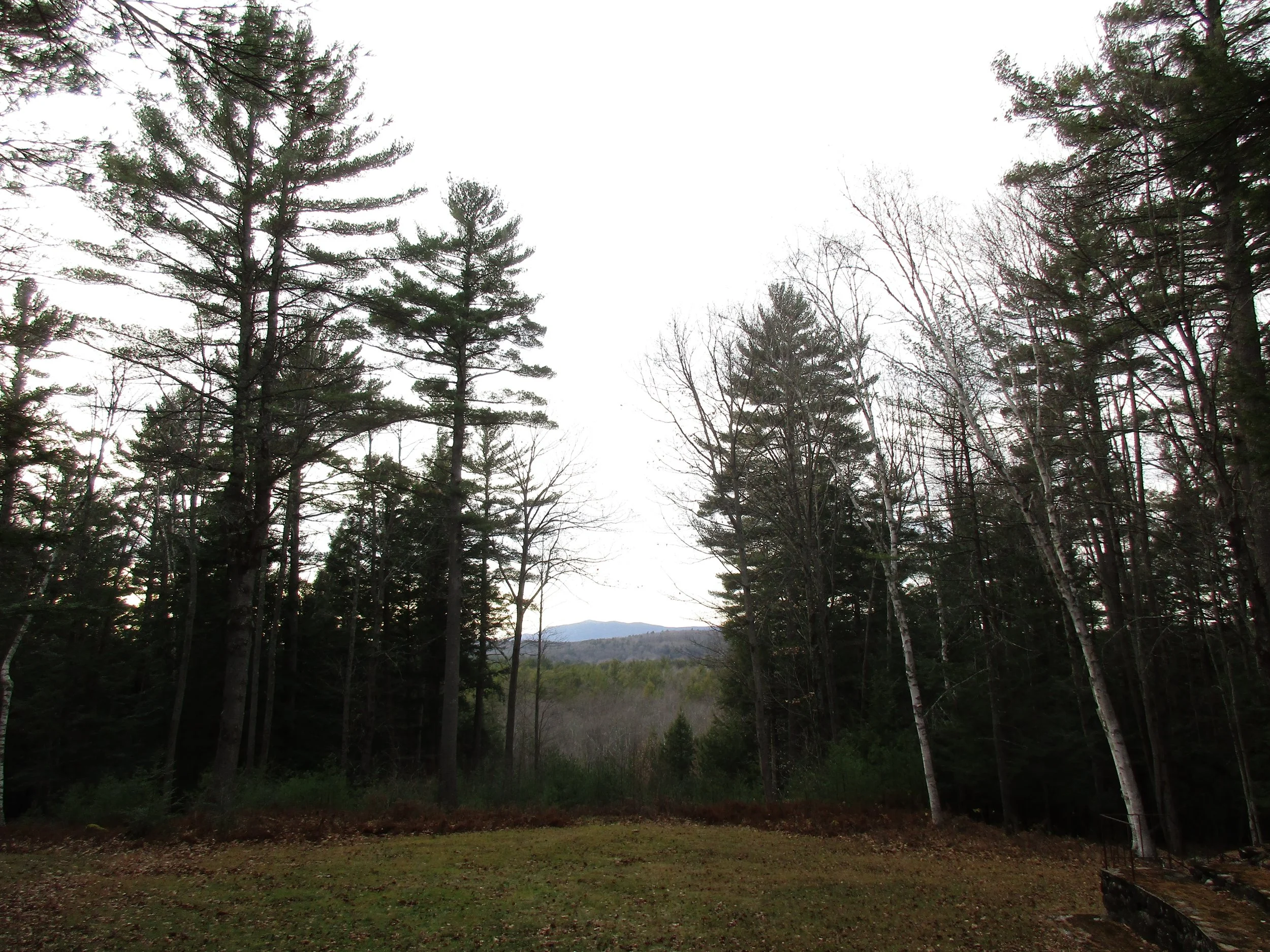
Mount Monadnock, view from MacDowell
One can’t help but feel time slow at residencies like MacDowell. The entire point of being here is to refocus. Not unlike a silent meditation retreat, fellows are encouraged to only quietly and sporadically interact through the day so that everyone feels they have the space possible to reset their lives and their perspectives. In some sense, the entire human system is reset in an environment such as this.
As time slows and our perceptions, feelings and rhythms reset, I find there is a natural way in which I have begun to question what I am paying attention to. How we use attention is the primary way we harness time and have the most agency over time, even if that sense of agency is itself an illusion. Nevertheless, what we pay attention to and how we direct our energies (intellectual capacities), shapes our very being.
In this way, time as a measure of our lived experience is most vividly manifest as attention. Attention is a kind of material way, or intellectual function, that reflexively informs our understanding of time. Perhaps attention is a way in which we fool ourselves into thinking we are harnessing time. This attitude toward time, that it can somehow be spent, is contradictory to another predominant idea we hold about time, namely that we can only watch it pass by, that we are victims of it.
These contradictions that our societal ideas of time present are a sure indicator that it exists only as a figment of our minds, at the mercy of our own fickle agreements and vicissitudes. And when we try to map our sense of time onto cosmic phenomena, the project seems absurd. What does a billion years even mean to our imagination? The thought experiment is meaningful as a tool for understanding that we cannot understand. But as an actual means to grasp the concept, we quickly realize that our social agreements about it have nothing to do with the phenomenon itself. So, what do we do? Should we come up with a new name for this cosmic thread that along with space shapes the contours of our cosmos? If we live with the cognitive dissonance, we must be clear that we are not confusing the mundane societal organizational mechanism with the cosmic thread that we have access to in the unmediated experiences of the present.