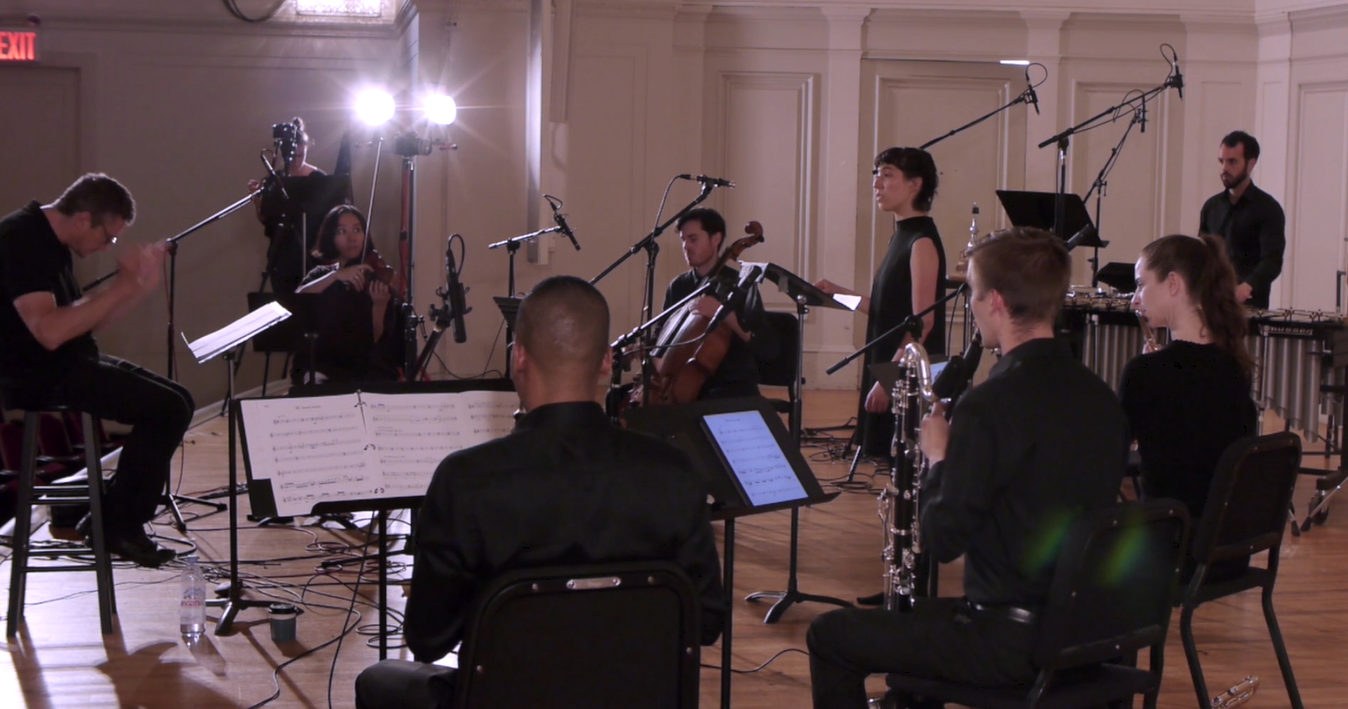
Angelus.
“It’s impossible to deplete the thematic and expressive density of ‘Angelus’ in a single listening: in just over forty minutes John Aylward manages to condense with absolute originality the linguistic innovations that have evolved over more than a hundred years while never resorting to sterile twists and turns nor to exaggerations suitable only for épater le bourgeois. ”
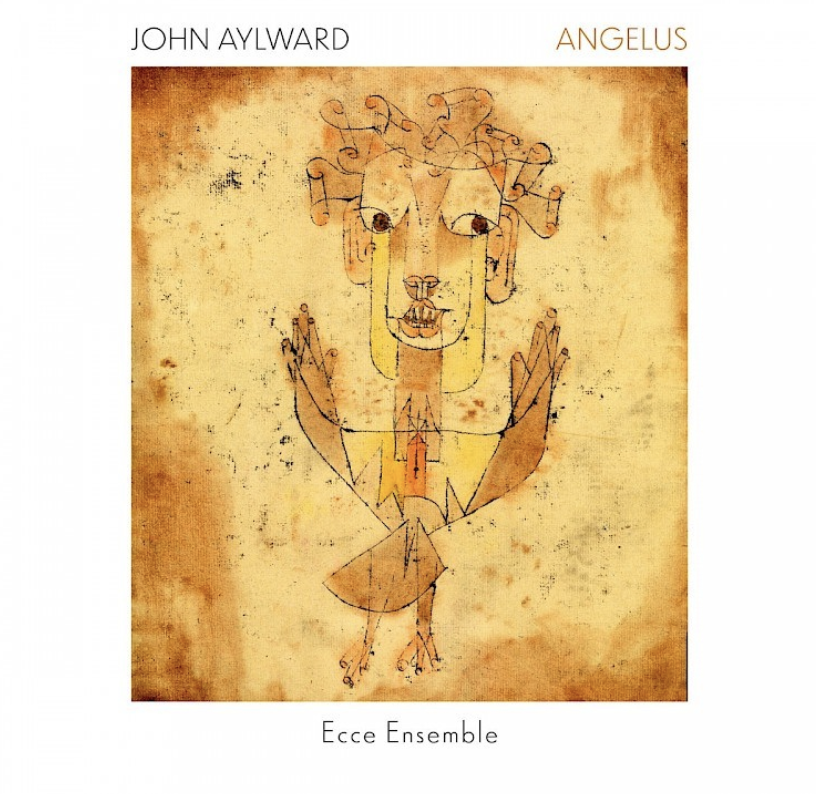
“It was a trip to Europe that was the starting point for John Aylward’s monodrama Angelus. In 2014, his father had just died and the American composer had decided to take his mother in the footsteps of her roots and her youth in Germany, which Nazism had forced her to flee and to which she had never returned since. One painting particularly caught their attention, Angelus Novus by Paul Klee, exhibited at the Center Pompidou and reproduced on the album cover. Framed by two poems… Angelus brings together a kaleidoscope of great metaphysical texts, from Plato to Walter Benjamin, to outline a path at the conjunction of intellect and emotion. In a vast palette of means and expression, from narration to virtuoso melismas, Nina Guo chisels the subtle textual and musical canvas of John Aylward, which declines, with an obvious sense of intimate accuracy, the different possibilities of the relationship between the verb and sound sieve. This miniature drama, which renews, with perhaps a hint of intellectualism that never sacrifices sincerity of sensitivity, is carried by the hushed shades of Ecce Ensemble.”
“In re-envisioning Angelus Novus, John Aylward honors its accreted meanings and catastrophic history. In his hands, however, Benjamin’s mystical vision of impotently flapping wings (brilliantly rendered at the end of the work’s second movement) appears at the vanishing point of an all-too-human, psychological drama: a struggle for transcendence rendered in a torrent of virtuosic vocaliza- tion. The voice is alternatively lyrical, didactic, ironic, bemused, inquisitive, con- templative, and ecstatic. It fitfully glides and soars in the stratosphere. It speaks plainly and sinks into noise. Its volatile relationship to the iridescent colors of its instrumental environment reveals a precarious and never fully-resolved accord between subject and world.”
“The fraught psychological drama, however, is contained in a taut frame—or rather, a pair of frames, one inside the other. The outer frame consists of settings of two mid-century American poets, avatars of the time and place Benjamin failed to reach. The piece begins with a musical rendering of a conditional verb in Adrienne Rich’s repeated phrase—If the mind were clear. Instrumental tex- tures progress from pointillism to arabesque and then coalesce to form coher- ent harmonies supporting a sustained vocal line. The work’s overarching riddle comes into focus here, at the borderline between transcendence and disenchant- ment: how to “manage the miracle/for which mind is famous.” At the end of the piece, a second American poet, Weldon Kees, presents an unambiguous but still enigmatic resolution—“Life offers no miracles, unfortunately, and needs assistance”— as voice and instruments achieve a more relaxed but still uncertain rapprochement.”
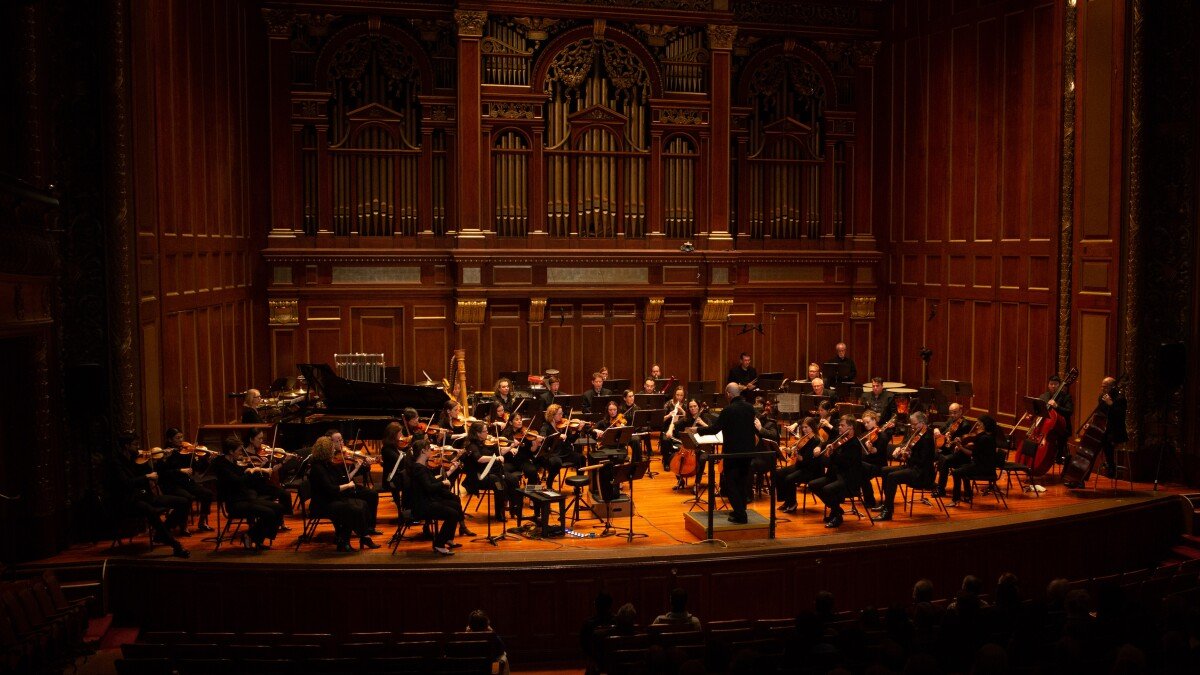

Nina Guo, voice
Emi Ferguson, flutes
Hassan Anderson, oboe
Barret Ham, clarinets
Pala Garcia, violin
John Popham, cello
Sam Budish, percussion
Jean-Philippe Wurtz, conductor
Recorded June 19th, 21st and 22nd, 2019.
The American Academy of Arts and Letters.
New York, NY.
Joel Gordon, recording engineer
Tina Talon, videography
Booklet notes by Martin Brody