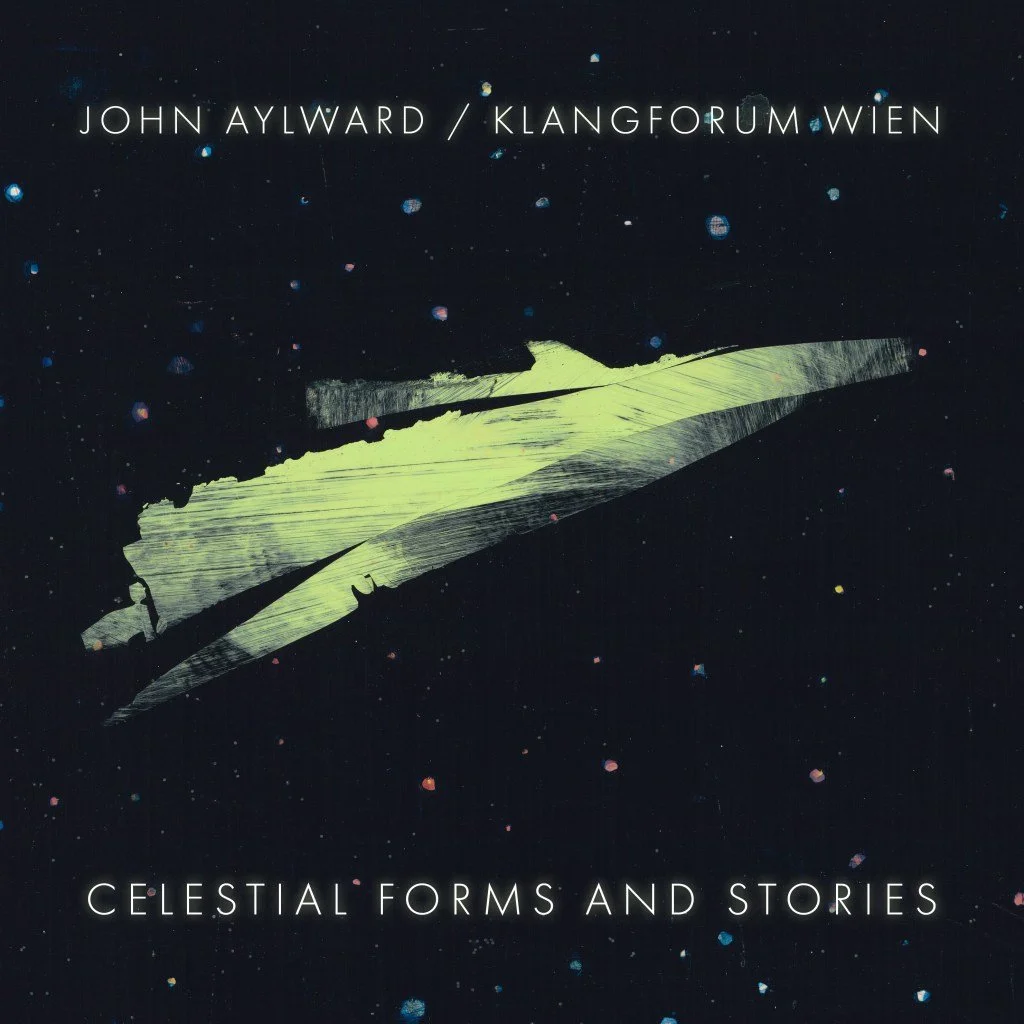
Celestial Forms and Stories.
“...urgent, forceful, insistent, and altogether compelling.”
-Daniel Barbiero.
Avant Music
“...so varied in atmosphere and activity that the ear is constantly drawn to some expressive flourish or instrumental combination or conversation.”
“Aylward takes a fresh and different perspective on Ovid’s Metamorphoses. Whereas artists have traditionally mined Ovid’s overflowing imagination for subject matter for their art, Aylward is much more interested in the lessons on crafting stories that Ovid has to teach. His suite Celestial Forms and Stories builds on Ovidian narrative techniques – or more specifically, on Italo Calvino’s careful analysis of Ovid’s style. In Calvino’s readings, which he expounds in his essay “Ovid and Universal Contiguity” (1979) and Six Memos for the New Millennium, his Norton Lectures at Harvard (1985), Ovid emerges as a master of lightness, quickness, and precision – virtues that Calvino, not coincidentally, prizes in writing more generally. These same qualities are central to the musical storytelling of Celestial Frms and Stories.”
“It is well worth paying close attention. Aylward’s suite is at turns mysterious, iridescent and daring, and the virtuoso players of Klangforum Wien are alert to every nuance and volatile utterance.”
“Each of these movements is a masterclass on the strategies of musical storytelling. Ephemera, conceived as the earliest movement and placed at the center of the work, may be one of the shorter pieces in the suite, but its role is nonetheless foundational. It presents the seeds of the elemental materials, gestures and textures, that return in the other movements. The strings and woodwinds of the quartet movements explore timbral and textual qualities in different pairings; the pulsating chords that orbit around Mercury return with full force in Ananke. This final and most extensive movement performs its title – Necessity – with an obsessive focus on a recurring gesture, equivalent to the Beethovenian “Muss es sein?”, that returns in various guises, be it as ambient chords, as bristling sharp attacks, or violent piano clusters. It is a study in extremes.”
Klangforum Wien:
Markus Deuter, oboe
Bernhard Zachhuber, clarinet & bass clarinet
Sophie Schafleitner, violin
Dimitrios Polisoidis, viola
Andreas Lindenbaum, cello
Björn Wilker, percussion
Recording Engineers: Kristaps Auster & Christoph Walder
Editing, mixing & mastering: Joel Gordon
Recorded at Tonzauber Recording Studio, Wiener Konzerthaus, Vienna, Austria, November 28th, 29th and 30th, 2020.
Album Design: Marc Wolf, marcjwolf.com
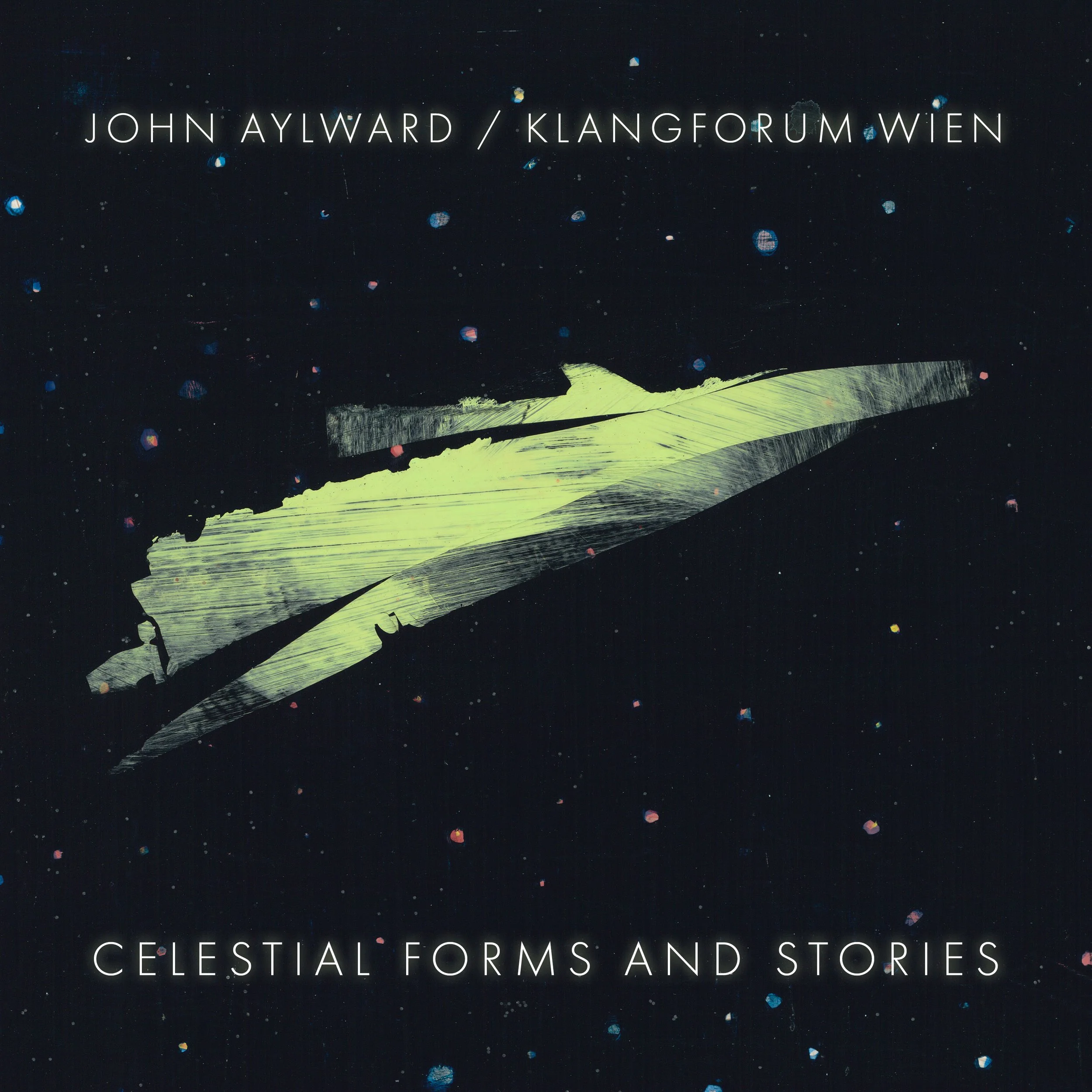
Cover Image: Roberta Aylward. Nightlight. 2015
Acrylic on birch panel. In the collection of the artist.