Angelus
Performed by soprano, Nina Guo and the Ecce Ensemble
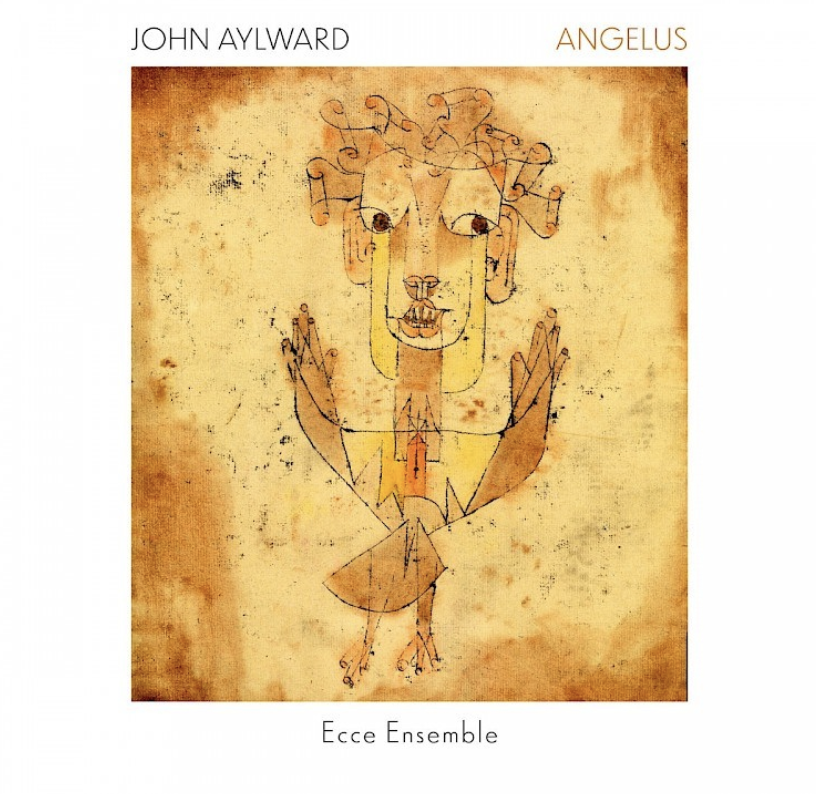
John Aylward’s Angelus is a monodrama that asks what it means to be human. Inspired by Paul Klee’s Angelus Novus and texts from writers including Adrienne Rich, Walter Benjamin, Nietzsche, Schopenhauer, and Plato, the work moves between spoken word, song, and vivid instrumental textures. With soprano Nina Guo and the Ecce Ensemble, Aylward creates a journey through mind, body, and spirit- exploring clarity, illusion, passion, and transcendence. The final shimmering meditation leaves us suspended in mystery, inviting reflection on meaning and displacement.
-
I. What is Possible 8:55
II. Angelus Novus 2:29
III. Dream Images 3:54
IV. The Abstract 2:20
V. Supreme Triumph 0:56
VI. Secret Memory 3:02
VII. Anima 5:31
VIII. Truth 4:31
IX. The Wing 3:34
X. A Distance From the Sea 5:10
-
Recorded at the American Academy of Arts and Letters, New York, NY, June 19, 21 & 22
Joel Gordon, Recording Engineer
Sarah Borgatti, Recording Manager
Mixed and Mastered by Joel Gordon and John Aylward
Produced with funding from The John Simon Guggenheim Foundation and with support from Catherine and Paul Buttenwieser and Cynthia and John Reed.
Cover Image: Klee, Paul. Angelus Novus. 1920. Oil transfer and watercolor on paper. The Israel Museum, Jerusalem. Jerusalem, Israel. Reprinted with permission.
Design: Marc Wolf, marcjwolf.com
Text translations and adaptations by John Aylward.
What is Possible by Adrienne Rich. © 1981 by Adrienne Rich from A Wild Patience Has Taken Me This Far, set to music by permission of The Frances Goldin Literary Agency.
A Distance from the Sea by Weldon Kees from The Collected Poems of Weldon Kees edited by Donald Justice used by permission of the University of Nebraska Press. Copyright 1962, 1975, by the University of Nebraska Press. Copyright renewed 2003 by the University of Nebraska Press.
Excerpt from Apocalypse by D.H. Lawrence © Cambridge University Press 2013. Reproduced by permission of Paper Lion Ltd, The Estate of Frieda Lawrence Ravagli and Cambridge University Press.
-
Ecce Ensemble:
Nina Guo, voice
Emi Ferguson, flutes
Hassan Anderson, oboe
Barret Ham, clarinets
Pala Garcia, violin
John Popham, cello
Sam Budish, percussion
Jean-Philippe Wurtz, conductor
-
John Aylward’s monodrama Angelus is conceived as a “treatise on the human experience,” inspired by a journey with his mother to Germany, her homeland before fleeing as a refugee during World War II. Drawing on Paul Klee’s Angelus Novus and texts from writers including Adrienne Rich, Walter Benjamin, Nietzsche, Schopenhauer, D.H. Lawrence, Carl Jung, Thomas Mann, Plato, and Weldon Kees, the ten‑movement work probes existential questions of truth, illusion, passion, and transcendence.
The opening sets Rich’s “What is Possible,” shifting fluidly between spoken and sung lines, each instrument briefly highlighted to mirror her catalog of necessities. Benjamin’s “Angelus Novus” follows, with vibraphone bursts, skittering strings, and winds evoking an angel surveying wreckage. Nietzsche’s meditation on truth and illusion is painted with precise musical gestures, while Schopenhauer’s text explores duality through cello, oboe, and ethereal soprano lines. Lawrence’s fiery text erupts in sprechstimme and searing vocal climaxes.
Later movements feature Jung’s reflections on the self, Mann’s hybrid text with flute and soprano textures, and Plato’s Phaedrus interwoven with the Catholic Angelus prayer, culminating in frenzied ensemble writing that depicts the fall of an angel. The final setting of Kees’ A Distance from the Sea dissolves into shimmering resignation. With soprano Nina Guo and the Ecce Ensemble, Angelus becomes a dynamic journey through mind, body, and spirit, leaving listeners suspended between clarity and mystery.