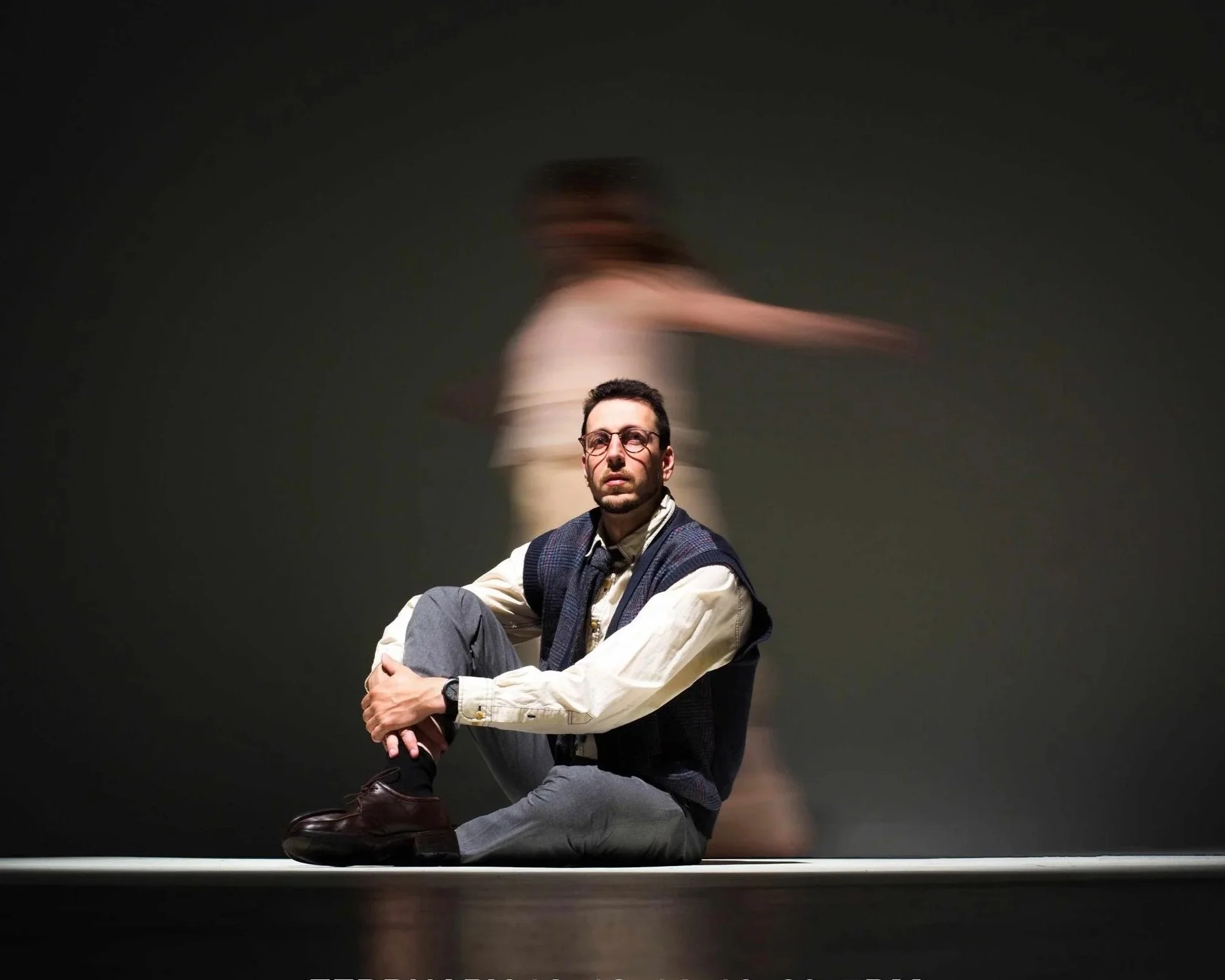

Switch.
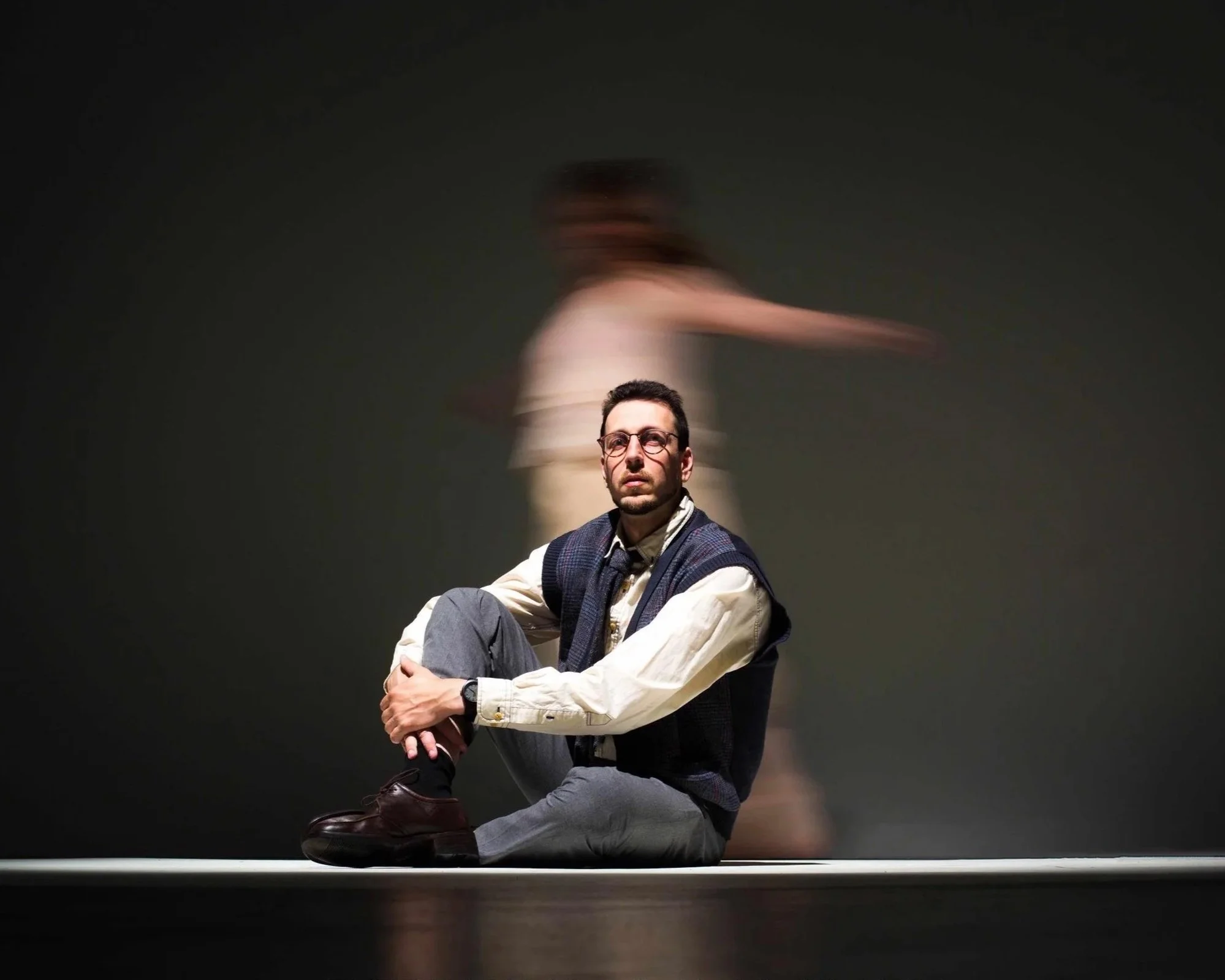
“Aylward summoned textures of efficient richness, delicate and deep all at once.”
“Switch makes an amalgam of almost every possible aspect of the theater, subtly transforming speaking into singing, instrumentalists into actors, ideas into dialogue… In the end, it becomes all Aylward: a tour-de-force presentation with genuine integrity and lots of comedy as well.”
“The fact that Molly and Anne are performed by the same singer — the galvanizing soprano Amanda DeBoer Bartlett — not only adds to the breathless quality of ‘Switch,’ but increases the dramatic tension and layers the action.”
“Because of Aylward’s integrated approach, “Switch” has a real chance to become a work that other ensembles embrace as well. Not only is this production compelling, but it leaves open many other interpretive possibilities.”
“In many ways, ‘Switch’ is a masterpiece.”
Synopsis
ACT I
SCENE I
Alone at his desk, Henry is working on a new play. Molly has given him an audio diary–a kind of dictaphone–to help with his writer’s block. Molly enters and says her auditions have been coming up dry. She wants to bring friends over to help prepare for an upcoming audition.
SCENE II
Henry is having more writer’s block and his audio diary is acting erratically. Molly enters and bemoans the fact that she failed another audition. Henry is encouraging but fixated on work. Molly debates canceling her meeting with friends and her upcoming audition. She pleads with Henry to take some time away for dinner with her and her father. Henry agrees to join after he gets more work done.
SCENE III
After pontificating about work, Henry veers into a confessional about his difficulties with Molly. While confiding in his diary, Anne enters, asking about Molly’s gathering of friends. Neither can remember if it’s been cancelled and they begin to talk. Soon Anne reads Henry’s drafts, offering surprising critiques and illuminations on drama.
ACT II
SCENE I:
With Henry at work, Molly enters asking why he missed dinner. Henry says that Anne’s visit kept him. Molly is confused, swearing she had cancelled her meeting and doesn’t even know anyone named Anne. Henry says he made a breakthrough with Anne, but when Henry shares his new drafts, it’s clear that his work is in shambles. They agree to take a weekend away on vacation and that Molly will return in the morning when they’ll leave.
SCENE II
Once Molly is away and Henry back to work, Anne visits. Henry first confronts her, saying that Molly has never heard of her but Anne changes the subject back to Henry’s work and soon reveals that she is not exactly who she says she is. Henry admits that she is so stimulating, he feels he’s falling in love with her. Anne insists that Henry must turn his attention to Molly despite his newfound feelings and that she’s not there to confuse Henry, but rather to help him become a great artist.
SCENE III
Molly returns to see that Henry, asleep, has forgotten about their weekend trip. Roused, Henry insists that he had another breakthrough with Anne. Now suspicious of Anne, Molly says that she just wants to live a normal life away from Henry’s professional pressures. Henry insists on the importance of the life of the artist, wanting to share his latest draft and also a special present (a ring). Henry searches the apartment but can’t find the ring for Molly. Molly, not in the mood to indulge Henry, leaves, upset that the weekend plans have been ruined.
ACT III
SCENE I
With Molly away, Henry is back at his desk, confiding in his audio diary that he’s still confused about his personal life. Anne appears and Henry shares a coherent recent draft of his story. Happily, Anne insists that with the play well on its way, Henry turn to his personal life, pleading for him to recognize Molly. To show him that everything he loves about her can be found in Molly, Anne transforms herself into an image of Molly. With his projections of Anne now in the image of Molly, Henry proposes.
SCENE II
Henry and Anne wake in bed. Henry thanks Anne for clarifying that he’s been in love with Molly all along and that Anne has always been a kind of figment of his imagination. Anne disappears and Henry calls out her name. Molly, knocking at the door, hears Henry’s calls and is again upset. Molly declares she is finished with Henry and her constant suspicion over Anne. Henry insists that Anne is only his muse but when he describes her visitations he only seems crazy. Henry picks up the audio diary and declares that Anne visits him through the device, but as he turns it on, it erratically plays back excerpts of his private thoughts regarding Anne. Molly is further distraught and leaves. Henry is left in ruin.
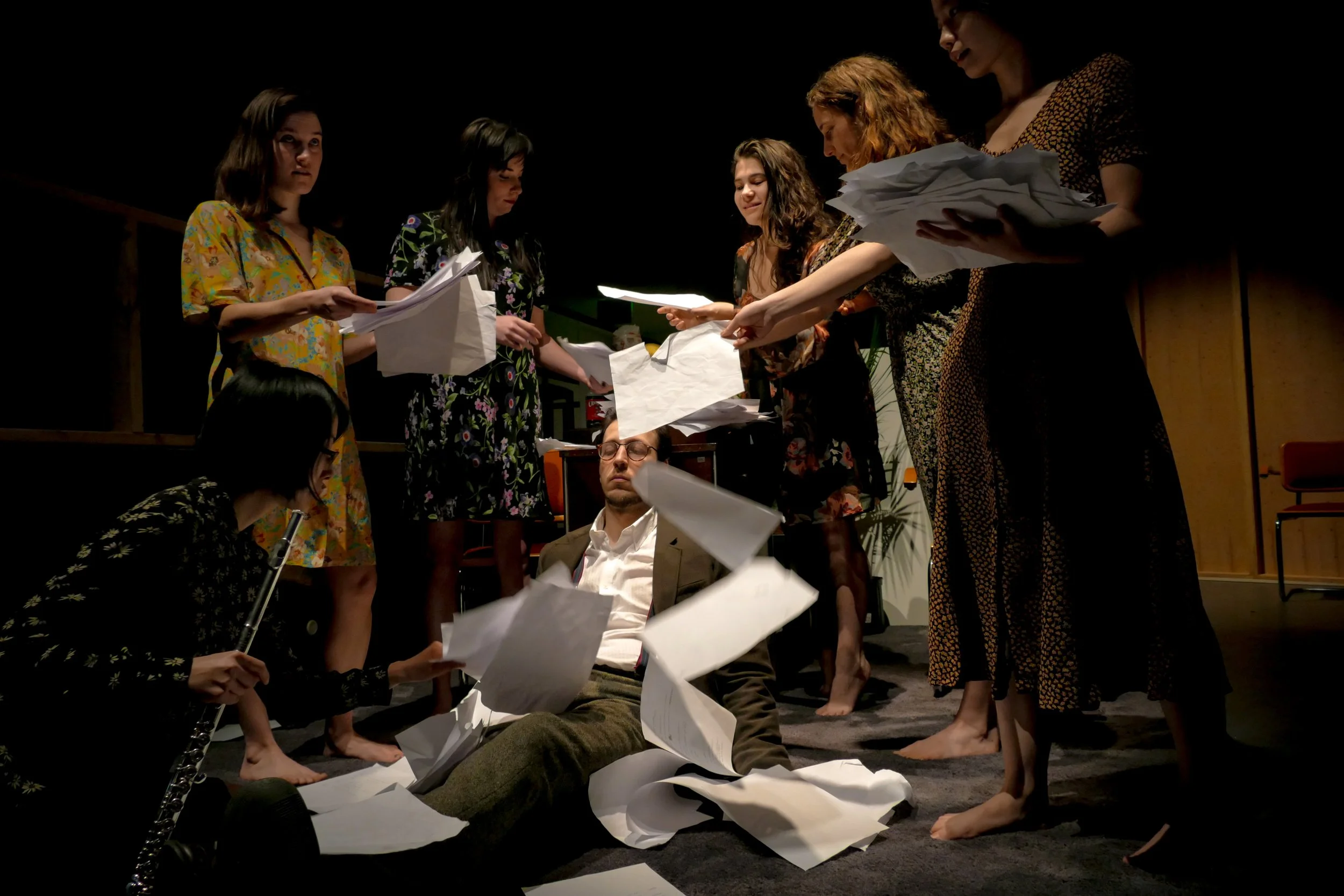
Switch.
2016. 90′
Opera in One Act
Libretto by Aylward & Multiple Authors, adapt. Aylward.
For Soprano, Baritone, Flute, Clarinet, Cello and Percussion.
Commissioned by Le Laboratoire, Cambridge for their inaugural season.
Premiere Performance Credits:
Directed by Laine Rettmer
Set Design by Andrea Merkx
Produced by John Aylward and Carrie Allen
Production Assistant, Ankica Koldzic
Amanda De Boer Barlett, Molly / Anne
Mikhail Smigelskiy, Henry
Keiko Murakami, flutes
Vasko Dukovski, clarinets
Serafim Smigelskiy, cello
Michael Truesdell, percussion
Jean-Philippe Wurtz, conductor